
Interview with Koye Oyerinde
The book was inspired by my former students who seemed to wonder why I had unique and uncommon clarity about the determinants of healthcare outcomes in America and in the so-called developing world.
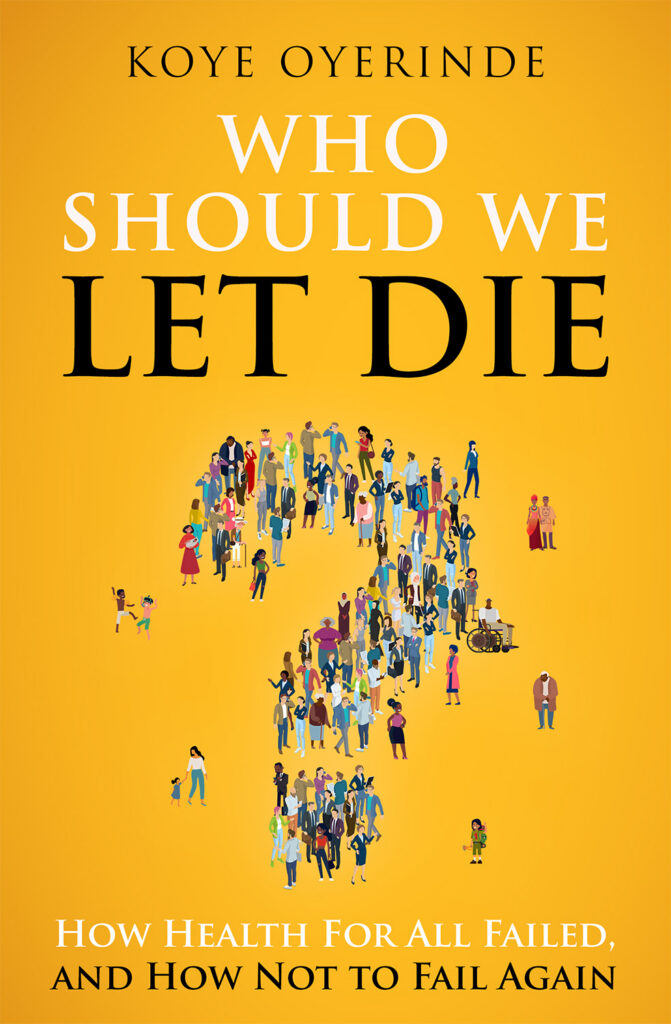
The title came after many weeks of pondering about the essence of the book. When we, as clinicians, merely issue a prescription and move to the next patient without thinking about the overall context of how the patient will access the medicines, the homes they live in, safety, and the other things that make health possible, it implies that we don’t really care if they die or survive. It is that sort of thinking that led me to the title
It is indeed gratifying that some readers found what I wrote worthwhile. For me, it makes the Covid lockdown period not too bad, after all
The key takeaway is that health for all is possible if we truly make it a goal. No child should suffer or die because their families are poor and unable to afford health care services. Through taxes and levies of all sorts, governments must make payment for healthcare services at the point of need a thing of the past.
As a child with several near-fatal battles with malaria who went on to become a pediatrician with a doctoral degree in health policy, and having worked in several countries and advised many ministries of health in Africa, Asia, and Pacific Islands, I bring all those experiences to bear on how I see healthcare. I think of many kids who didn’t survive malaria, malnutrition, and the other afflictions worsened by poverty. Surely, someone needs to speak up for them. Think even of the hardworking but poor folks. Shouldn’t they have access to healthcare services like anyone else?
I have a book that’s still brewing, yet untitled, about experiences as a doctor; things that look funny now but weren’t so funny in the heat of the moment. It should be a more lighthearted read
I think the greatest challenge is marketing the book. Marketing doesn’t come naturally to me. My work has always spoken for itself, but authorship needs more than hoping the content will sell the book.
I’d say, keep writing; don’t give up until you have put all your thoughts on paper. Revise and revise until you are ready to share it with the world. Of course, get a good editorial team to help finesse your writing and point out blind spots in your thinking and writing.
Question 10: Where can readers get a copy of your book?
I would be very diligent when researching self-publishers, certainly more diligent than I was for my second book. I thought I did decent research. But, in hindsight, I guess the name of the outfit should have been my first clue: Amazon Publishing Pro. Now, that’s a little shady. I knew damn well they were not THE Amazon. They were just piggybacking on that name. They were more interested in the social media campaign than giving me a clean, edited version of my manuscript. I ended up firing them and not getting my money back.
Then, I went to the publisher of my memoir, She Writes Press.
The reason I did not go to She Writes Press originally was because I had assumed that my new book was not up their alley. As it turns out, it is. But Brooke wants so many changes that I basically have to go back to the drawing board and do more research, including conducting more interviews, which I am currently doing.
Readers can find my book on Amazon.